
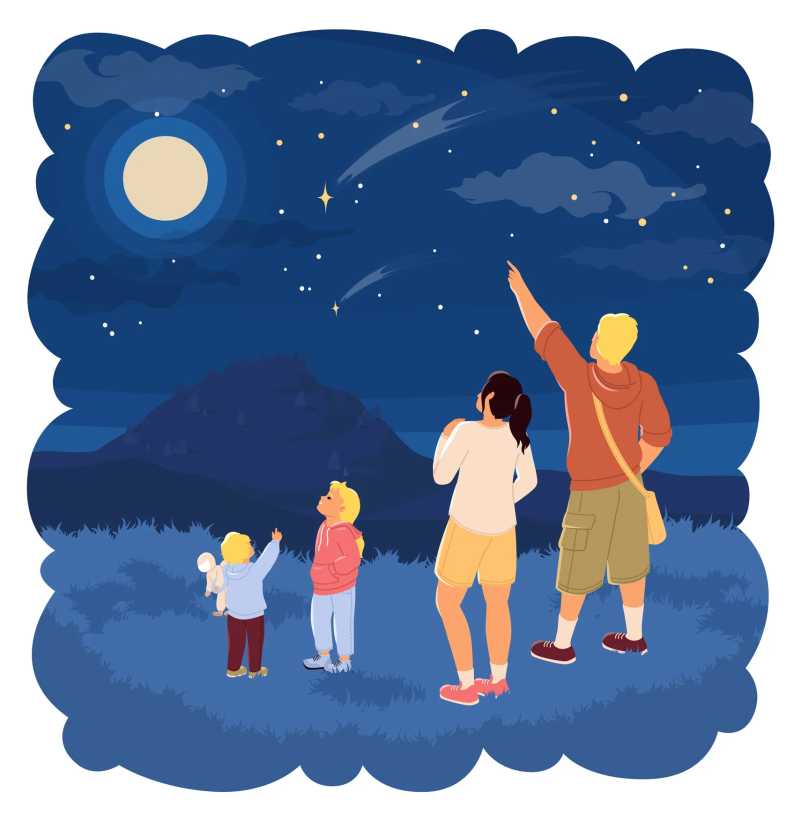
New York City’s glow makes it one of the toughest places in the country to see a truly dark sky. Between streetlights, storefronts, and skyscrapers, even the brightest constellations can fade into the background. But here’s the good news: great stargazing near New York City is absolutely possible—you just need to know where to go!
The best spots for stargazing near NYC include Cherry Springs State Park, the Catskill Mountains, Fire Island National Seashore, and Harriman State Park, all within roughly one to three hours of the city. Closer to home, you’ll also find darker pockets of sky at places like the David Dunlap Observatory and select Long Island preserves.
Whether you’re searching “star gazing near me” for a spontaneous Friday night plan or mapping out a weekend family day trip, there are options for every level of effort. Some locations are easy drives with parking and restrooms (a must for kids); others are accessible by commuter rail plus a short walk. A few are designated Dark Sky sites for serious astronomy fans, while others are relaxed, blanket-on-the-beach kind of places where kids can spot the Big Dipper.
Timing matters a lot (new moon nights are best), and so does distance from major highways and town centers. But you don’t need a telescope or an overnight camping permit to make it memorable. With a little planning, stargazing in NY can turn an ordinary evening into something surprisingly magical and really fun.
Whether you’re planning a family overnight or just looking to escape the city lights for a few hours, this guide highlights recommended stargazing locations near NYC, from easy-access parks to certified dark sky destinations, plus tips on what to bring and the best times to go.
At a Glance
- Yes, you can go stargazing in New York City, and you don’t need a telescope to get started
- Free apps can help you identify stars, planets, and constellations
- The moon, bright planets, and major constellations are the easiest to spot
- Parks and waterfront areas offer darker skies than city streets
- Short trips outside the city dramatically improve visibility
- It’s a simple, low-cost activity that works for all ages
Stargazing Tips for Beginners
If you’re new to stargazing, don’t overthink it. You don’t need a telescope, and you don’t need to memorize constellations. All you need is a darker patch of sky, a little patience, and maybe a phone app to help you figure out what you’re looking at.
A big plus is that stargazing works at any level. Little ones can hunt for the brightest star they can find. Older kids can try spotting major constellations or tracking the phases of the moon.
Psst…Check Out 12 Awesome Music Activities for Kids in NYC: Concerts, Broadway & Live Performances
Check What’s In the Sky
Get an idea of what the sky’s going to look like before heading out for a stargazing session.
It’s best to stargaze before a full moon, so look at the moon phase when you’re picking a date. You’ll also see different constellations depending on what time of year and time of night you go out, so look at a star map to get an idea of what you’ll be seeing.
While you’re at it, be sure to check the weather before heading out. Nothing ruins a night of stargazing like a sky full of clouds.
Download an App
A stargazing app can be helpful as you and your family scan the sky. Many of them cost money, but there are plenty of free or cheap options if you’re more of a casual stargazer. Some good options for beginners include SkyView or Star Rover.
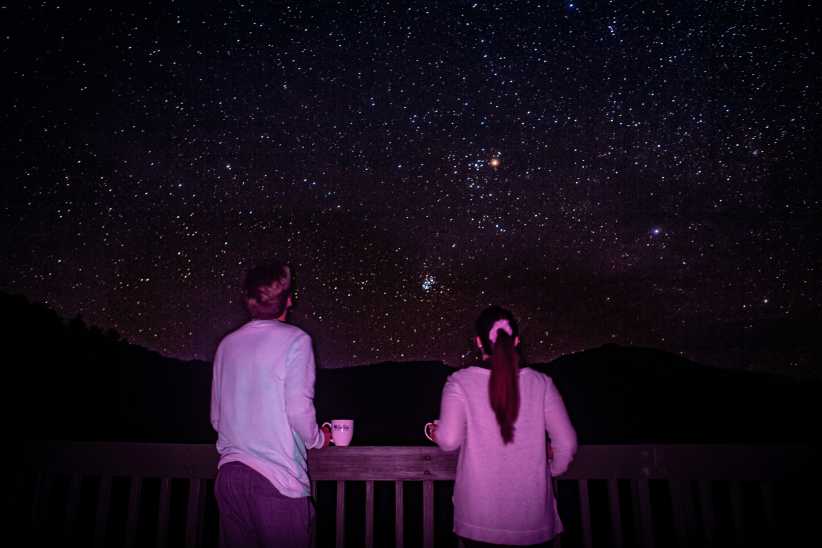
Expensive Equipment Not Required
Having an expensive telescope is not a requirement for stargazing, especially if you’re just starting out. An old pair of binoculars will do the trick. They’ll be more than enough to magnify the night sky and allow you to see things you may not have been able to see before.
Get to know the night sky before taking the plunge and buying a telescope.
If you decide later on that you want to take your stargazing to the next level, do some research when deciding what telescope is best for you and your family.
Dress and Pack Accordingly
Set yourself up for success by dressing for the weather when going out for a night of stargazing. New York nights can get chilly, so be prepared to layer up with sweaters, cold gear, winter coats, scarves, hats, gloves, and anything else you typically need to stay warm.
Bring a few blankets for extra warmth and to give yourself some protection from the ground if you choose to lie down to look at the stars.
Find an Astronomy Club
There are a ton of clubs for amateur astronomers, which are a great resource if you’re looking to get into stargazing yourself. For example, the New York-based Amateur Astronomers Association offers classes, lectures, and public observation sessions throughout the year.
“This is a great way to learn and receive guidance in your first steps toward discovering the universe,” says Cyril Dupuis, passionate stargazer and founder at Vaonis. “It also provides an opportunity to observe the night sky through high-quality telescopes before deciding to invest in one.”
Joining a group like this is a great way to get more involved with stargazing alongside a new community.
You can also follow astronomers on social networking sites. Often, they’ll post about cosmic events coming up or where and how you can see celestial points of interest.
Recommended Locations for Stargazing in New York
Believe it or not, there are some great stargazing spots in New York City. They’re not great for seeing the deepest objects in space, but they’re good for seeing a few bright spots in the sky.
“In general, the key is to find areas with minimal exposure to bright city lights, a clear horizon, especially toward the south, and of course, accessibility late at night or overnight,” Dupuis continues. “With these criteria in mind, places like Central Park, Floyd Bennett Field, Great Kills Park, etc. could be suitable options.”
If you’re looking to see more in the sky, we’ve also included some spots outside of the city.
Pupin Physics Laboratories
Home of the physics and astronomy departments at Columbia University, Pupin Hall hosts public outreach astronomy events for the whole family. Drop in for rooftop stargazing every other Friday during the academic year.
Check out their Family Astro events, hosted three times a year and targeted towards children with families ages 6 through 12. Be sure to check out their website for the latest news and events.

The High Line
Take a closer look at the stars at the High Line in Manhattan. Join the Amateur Astronomers Association every Tuesday at dusk to learn about what’s in the sky that night.
The program is free and open to visitors of all ages but only runs from April through October, so put this on your spring to-do list!
Vanderbilt Museum & Planetarium
The Charles and Helen Reichert Planetarium at the Vanderbilt Museum on Long Island offers planetarium shows throughout the week and public stargazing hours in the Observatory on Friday evenings.
Their website also offers a comprehensive list of astronomy resources for amateur astronomers of all levels.
Walkway Over the Hudson
This historic site is the world’s longest elevated pedestrian bridge and a great place to stargaze. Watch the stars shine against the Hudson River and take in the breathtaking views.
Montauk Point State Park
This state park on Long Island is far enough away from the bright lights of the city to give you a perfect sky for stargazing.
If you go at the right time of year, you can even get a glimpse of the Milky Way’s core, which is visible from the Northern Hemisphere around February every year. Gaze up at the stars amid views of the Atlantic where it meets the Block Island Sound.
Harriman State Park
One of the closest state parks to New York City, Harriman State Park in Rockland and Orange counties, is full of great locations for stargazing. It’s open year-round, so you can always make a trip with your family for some stargazing.
Big Buck Mountain Multiple Use Area
There are no formal trails at Big Buck, but there are 146 acres of land open for primitive camping and exploring. It’s a good choice for stargazing if you and your family are experienced with camping and being outdoors.
Adirondack Mountains
Just a short drive from the city, the Adirondack Mountains offer fantastic and clear views of the sky. Ideal for a first-time stargazer, many can see the glorious stars that light up the sky due to the low light pollution and high elevation. Mount Jo, Tupper Lake, and the Adirondack Sky Center & Observatory are particularly known for their dark skies and stargazing opportunities.
Psst…Check Out Things to Do with the Kids This Weekend in NYC