

Small, practical tweaks in a bedroom can help your child sleep better, feel secure, and enjoy their space.
You’ve heard it before: Your living space reflects your inner state of mind. While all of our homes can get a little messy with small feet scampering about, there is a difference between the mess that results from a playdate vs. the mess that qualifies for an episode of “Hoarders.” Yet even with regular tidying up, kids’ bedrooms can get out of control fast. On the flipside, of course, a little mess is normal, and a lived-in room is a happy room.
Keep in mind, your child’s bedroom isn’t just where they sleep at night. It’s their own little world where they calm down after a long day at school and fill up their little creative minds, and then hopefully, sleep.
When my home is organized, clean, and I have things just where I want them, I feel calmer almost immediately. The same goes for kids, and when a room feels calm instead of cluttered, they tend to settle more easily. You don’t have to take apart their whole room either. A few simple tweaks can do the trick.
At a Glance:
- Arrange furniture for comfort and security
- Choose calming colors that reduce visual clutter
- Create simple, kid-friendly storage systems
- Keep the air fresh for a lighter, cozier space
Psst… Check Out Daylight Saving Time Is Coming: How to Shift Your Child’s Bedtime Without the Meltdowns

Four Simple Ways to Create a Calm, Sleep-friendly Bedroom for Your Child
Place the bed in the farthest corner of the room, facing the door.
Particularly for kids, there’s something reassuring about being able to see who is coming in when the door opens. Positioning the bed so your child can easily view the doorway, without being directly in line with it, can help them feel more secure at night. Avoid placing the bed directly under a window or in a spot where the door swings open above their head. This is especially helpful for kids with anxiety or sensory issues.
Paint the room a soothing and calming color.
Color really does matter more than we think. Generally speaking, soft, calming shades, combined with sufficient storage, can instantly tone down the visual noise in a room. The less visual clutter there is, the more peaceful the space feels, for you and for them.
Choosing simple patterns, like earth tones instead of busy ones, also helps. The only caveat is with older preteens and teens, who might want a busier or bolder color scheme or pattern to their room. When kids are old enough to choose, involve them in the decision. Asking questions about what makes them feel calm or centered also helps them think about what works better for them, and that is a life skill that goes far beyond how their room looks.
Set up a system so the room can stay tidy.
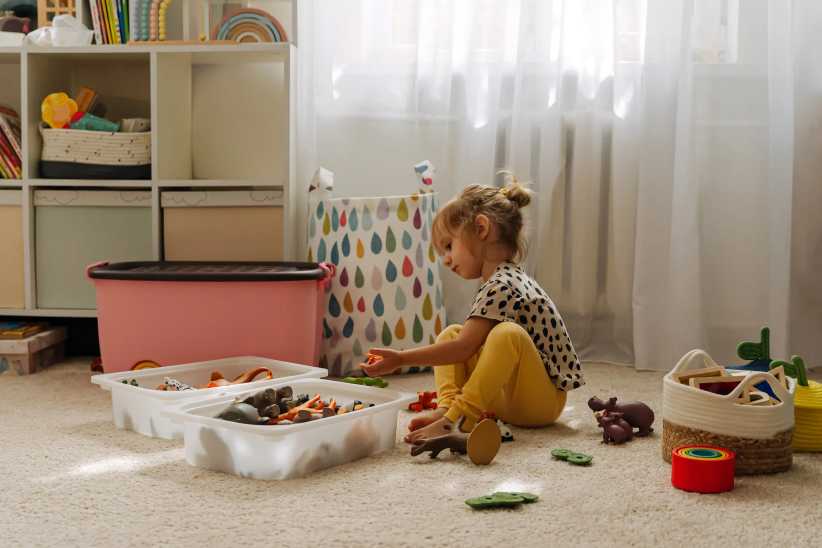
Keep bins, baskets, or other creatively designed storage options for easy clean-up. They will be a lifesaver. With young children, make sure everything is at a height they can actually reach. If they can’t grab it or put it back easily, it’s not going to stay organized. Bins are great because kids can toss things in and pull them back out without a struggle. Keep it simple: cars and trucks in one bin, books in another, balls in another. The simpler the system, the more likely it is to work.
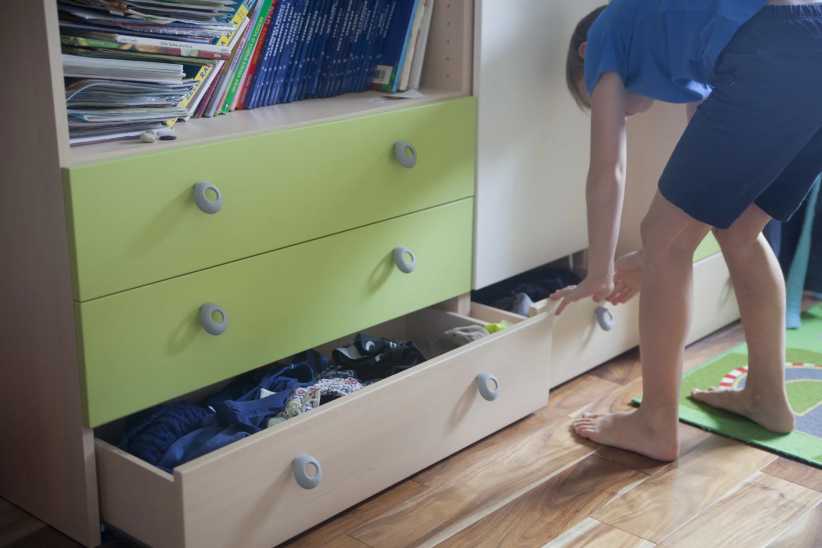
Likewise, for dresser drawers, organize them in a simple, easy-to-follow order, such as pants in one drawer, shirts in another. Very young kids might not distinguish between a sweater drawer versus a short sleeves drawer, so just put all shirts in one drawer, and only enough for them to choose from daily. When you pack a drawer too full, it’s going to get messy. There’s just no way around it. The less you shove in there, the easier it is for everything to stay in place.
Make sure fresh air flows freely.
Whenever you can, crack a window and let some fresh air in. It’s amazing how much lighter and more comfortable a room feels with a little airflow, plus it’s healthier. As a nurse, my mom was a stickler for this, and it worked every time. In cold weather, an air purifier can help keep the air feeling clean and circulating. Sometimes it’s the simplest things that make a room feel better.
You don’t need to redo the whole room to make it calm and sleep-friendly. A few small and easy changes can help your child feel safer and sleep better, not to mention calm yourself in the process.
Psst… Check Out Is Winter Affecting Your Child’s Mood? It Could Be Seasonal Affective Disorder