
Matrescence is real. Losing your identity after becoming a mom doesn’t happen overnight, but it certainly affects your day to day as a mother and as a woman.
At a Glance:
- Akin to adolescence, matrescence is a process for women entering into motherhood. It changes you physically, emotionally, and hormonally, and often, it leads you to question who you are right now.
- Rediscovering yourself after becoming a mom is possible—just give yourself some grace. It’s about priorities and boundaries.
- As with any process in life, speaking up and asking for help will take you places. When mom is alright, your kiddos and family will be, too!
Psst… Check Out Struggling with Conflicting Feelings About Motherhood? A Peek Into Maternal Ambivalence
Matrescence: An Inevitable Change When You Have Kids
There’s an unspoken moment when many moms realize something feels off. Not in a dramatic way. Not in a “I don’t love this” way. But in a subtle, nagging sense that parts of who you were before motherhood have gone strangely quiet.
No one really tells you about this part. They warn you about sleepless nights, stretched schedules, and how fast the time goes by. Heck, they even tell you about how your body would never be the same—and good luck trying to bounce back quickly. But they don’t talk enough about the quieter shift: when you look up one day and realize you’re not entirely sure who you are anymore beyond being someone’s mom.
If you’ve ever caught yourself thinking, I love my kids, but I miss me, you’re not failing. You’re experiencing something incredibly common and deeply human: matrescence. Your inner world gets crowded out by responsibility, and somewhere between being needed constantly and putting yourself last automatically, your identity starts to blur. Sounds familiar?
What No One Warns You About When You Become a Mom
Motherhood doesn’t just add a role to your life. It rearranges everything. Suddenly, your time, body, energy, priorities, and even your language belong to someone else, often without warning or recovery time. Your world shifts. The things that once defined you—your career, creativity, style, social life—can start to feel distant or irrelevant. And yet, admitting that loss may feel taboo. We’re expected to feel fulfilled simply by loving our children. Wanting more can feel selfish, even though it isn’t.
What’s jarring isn’t just the workload, it’s the way motherhood quietly becomes your primary description, and suddenly, who you are feels overshadowed by what you do for others—or don’t, if heaven forbids moms draw some boundaries.
Why Identity Loss After Motherhood is So Common
This identity shift has a name: matrescence—the physical, emotional, and psychological transition into motherhood. Just like any other pivotal phase, it’s messy, confusing, and nonlinear. It hits so hard for many women because, literally, it changes you and your life overnight. There’s no independence; your time becomes fragmented, not to mention your mental load. Your body no longer feels fully yours, and there’s a galore of physical changes steadily coming in as if there’s no tomorrow.
You’re not just adjusting to a kid: you’re caught in the middle of a version of you that’s no longer there, and a version of you that’s yet to exist. Moms are expected to adapt instantly, stay grateful, and keep everything running smoothly. The result? A deep internal shift with no roadmap or blueprint.
The Quiet Ways Moms Start to Disappear
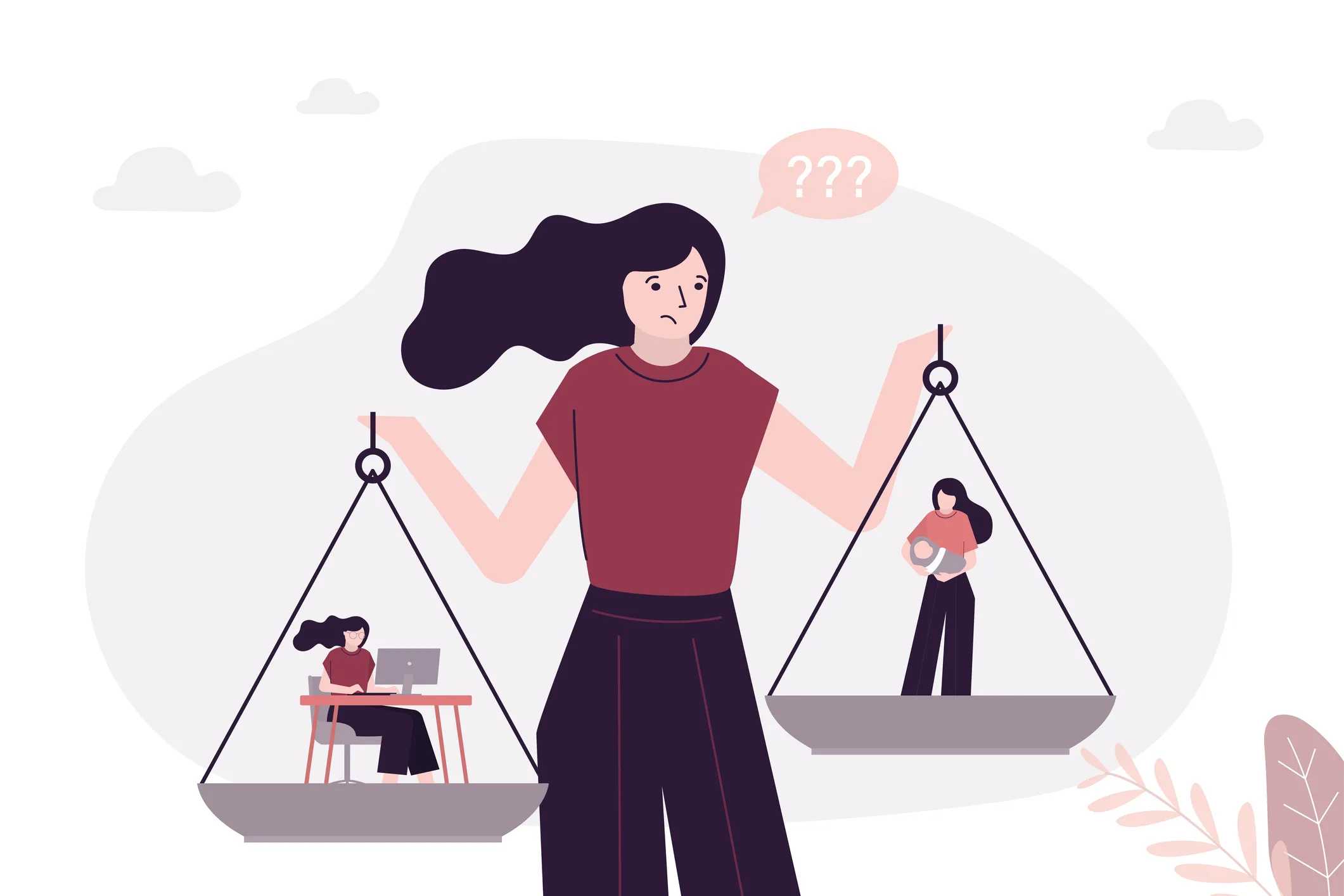
Identity loss or matrescence doesn’t usually happen all at once. It creeps in slowly. You stop doing your hair because there’s no time. You wear the same outfit every day because comfort wins. You turn down invitations, date nights with your partner, or girls’ trips because coordinating childcare feels exhausting. You stop talking about your work, passions, or dreams because they feel complicated, or because no one asks anymore. Even resting becomes transactional, something you earn only after everything else is done.
None of this happens because you don’t care. It happens because you’re caring for everyone else first. This burden may feel heavier if you grew up in a culture where moms are always there, but nobody is there for her when she needs it the most.
Why This Loss Feels So Hard to Talk About & Yet, You Need to Name It
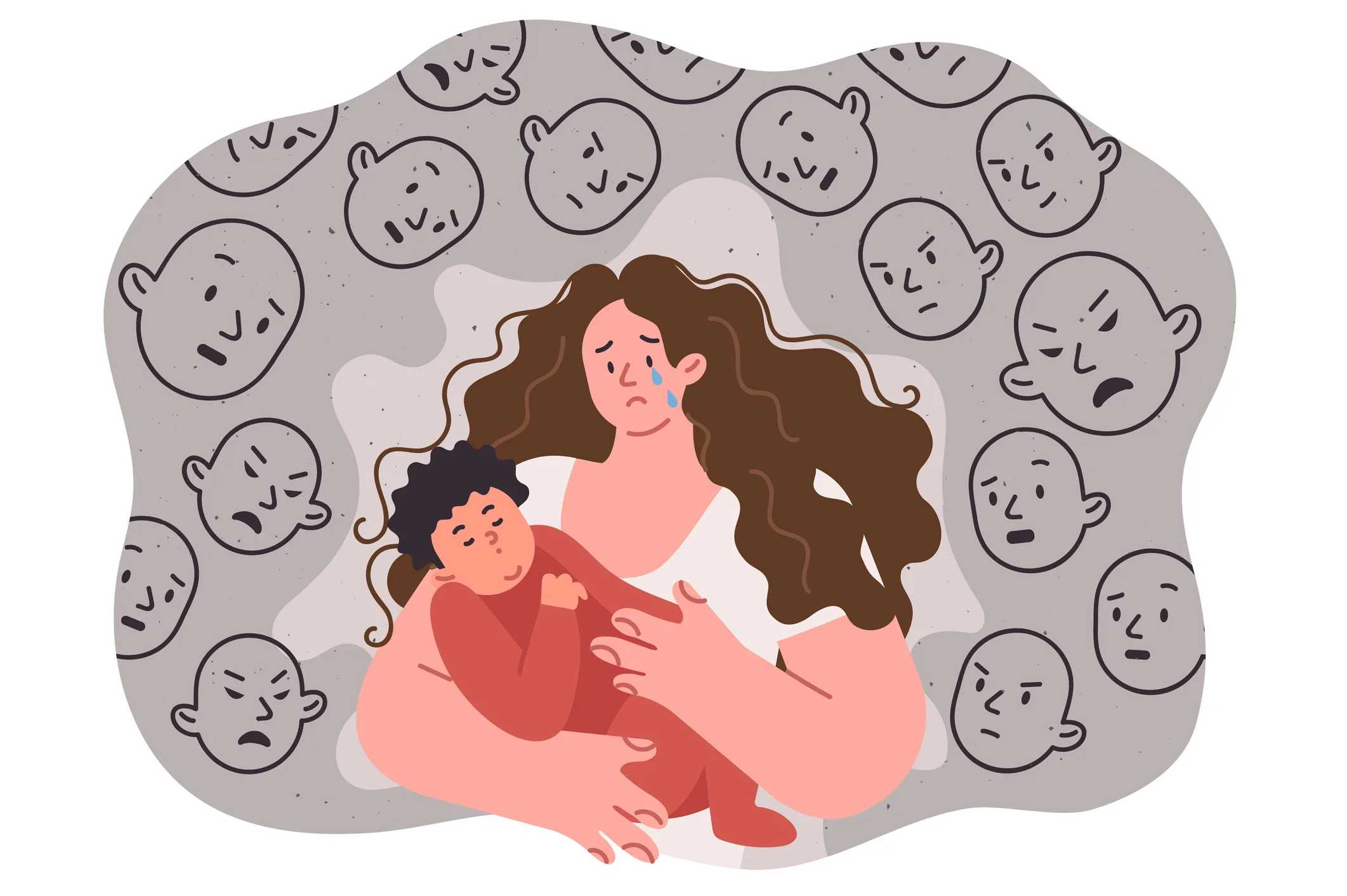
There’s a rule in motherhood: you can admit exhaustion, but not loss. You can say you’re tired, but not that you miss yourself or dare to say it, grieving your old life. Many moms stay silent because they fear being judged, misunderstood, or labeled ungrateful. But grief and love are not opposites. You can deeply love your children and still mourn the parts of yourself that feel dormant or erased.
Naming these feelings matters. Understanding that this is a developmental transition, not a personal failure, can be incredibly freeing. You’re not “losing yourself.” You’re becoming someone new, and that takes time. Perhaps half of a lifetime, but you’ll get there as long as you don’t forget about yourself during that journey.
How to Reconnect with Yourself Without Guilt
Reclaiming identity doesn’t mean abandoning motherhood. It means widening your perspective. Reconnecting with yourself without reinventing everything doesn’t require dramatic transformations—after all, life isn’t a movie. It requires acknowledgment, empathy, and softness.
Start by noticing where you’ve gone invisible. Pay attention to what energizes you, what drains you, and what you’ve stopped doing simply because it felt inconvenient to others. Reconnection can be small, slow, soothing—you set the pace, mama! Choosing clothes that make you feel like you; setting clear boundaries; protecting non-negotiable alone time, even briefly; speaking about your needs without minimizing them. Allow your interests to exist alongside motherhood or go back to what’s comforting.
Personally, I like to go back to my childhood hobbies to find myself again, to let that inner child out occasionally, like playing with clay or Play-Doh! Identity isn’t something you recover all at once. It’s something you rebuild in fragments, over time, through intention.
Who You Are Now Is Still Worth Knowing
You may never return to the exact version of yourself you were before kids, and that’s not a failure. Identity after motherhood is layered and complex. It’s softer in some places, stronger in others. It holds contradictions. It evolves. You are still interesting, and still worthy of desire and ambition. Still allowed to want things just for yourself.
The truth is, reclaiming your identity requires boundaries—with your time, your energy, and sometimes even your expectations of yourself. Motherhood changes you, but it doesn’t erase you! And sometimes, rediscovering yourself isn’t about going back. It’s about finally recognizing who you’re becoming and making peace with what life has handed to you: a new purpose to wake up and be thankful for.
Psst… Check Out Breaking Up With a Mom Friend