

Hudson Country Montessori School
Children are naturally curious. As parents, we want to foster that curiosity and help them develop a love for learning and find topics they’re passionate about. A big part of that means finding the right school that will challenge our little ones and support them as an individual. We want a place where our child won’t get lost in the mix, where strengths are noticed early, and where learning feels meaningful rather than stressful. At Hudson Country Montessori School (HCMS) in New Rochelle, NY, families discover a school that not only recognizes each child’s potential but nurtures it through a rigorous, joyful, and highly personalized Montessori approach from toddler through middle school. While many parents associate Montessori with preschool, HCMS offers an academically challenging and enriching elementary and middle school experience. The hands-on, mastery-based, self-directed learning approach for grade school prepares students for high school and the real world. Read on to learn whether HCMS might be the right fit for your child!
Psst…Post-Midnight New Year Celebration to Kick Off America’s 250th in Times Square
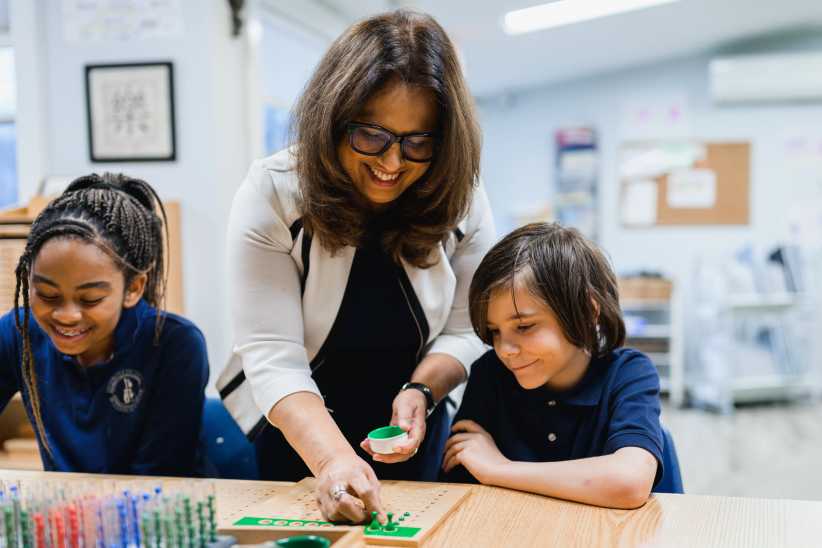
Traditional grade school takes a uniform approach and teaches to the middle across the board. But at HCMS, learning is intentionally individualized so every student can move at their own pace. If your child is reading years beyond their grade level, HCMS will recognize that gift and challenge them to advance even further. “Everything is individualized,” says Mark Meyer, Head of School. “Children get to control their own education. The teachers set standards but the students own the process. That’s why they are more engaged. We teach our students how to manage their own education by asking questions and making them think about their goals and the steps they need to take to achieve their goals. This Socratic approach to education leads to higher-quality thinking skills and a sense of student ownership of their individual learning journey.”
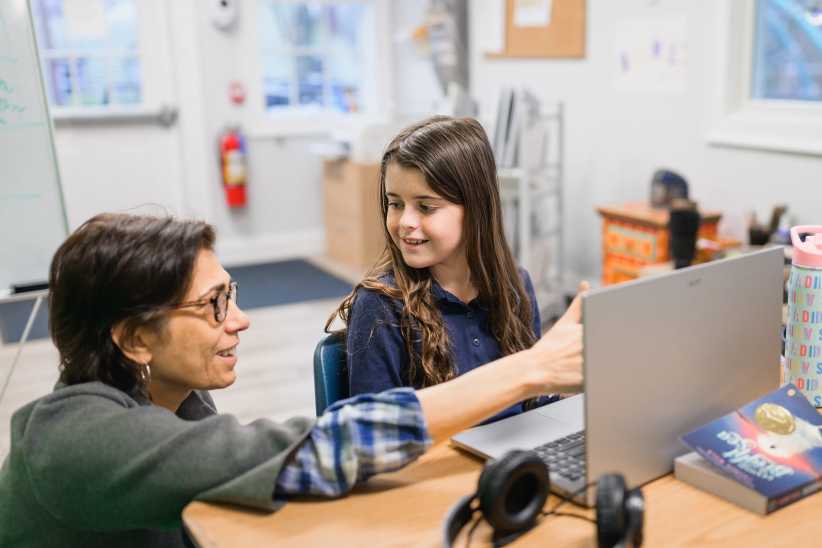
Hudson’s mastery-based model also ensures students progress when they fully understand a concept. This creates a solid foundation for learning more challenging concepts with confidence. And the lower student-teacher ratio ensures that each student is challenged to their full potential. That’s why most Hudson students are a year or more ahead of grade level in at least one subject. Jane Goodrich, parent of a daughter at HCMS, explains: “In a big school, children can get lost. Your child could be doing better academically; they’re just not motivated in the right way.”
Through work plans, goal-setting, and ongoing teacher coaching, children learn how to make purposeful choices about their learning. “Children get to choose what they want to do at different times throughout the day,” says Neeru Bhambree, Director. “With the guidance of a work plan, they learn to make thoughtful choices, manage their time, and take responsibility for their learning, much like we do as adults.”
Jane shares how this agency helped her daughter grow: “My daughter is very creative, so I have found that when she is given a project her teacher lets her present the data in a way to express her creativity. It allows her to enjoy the project more, so she dives further into the knowledge and thus learning more. The agency is a win, win!” Learning becomes meaningful and exciting, which leads students to develop academic passions and interests that they take with them into high school and beyond.
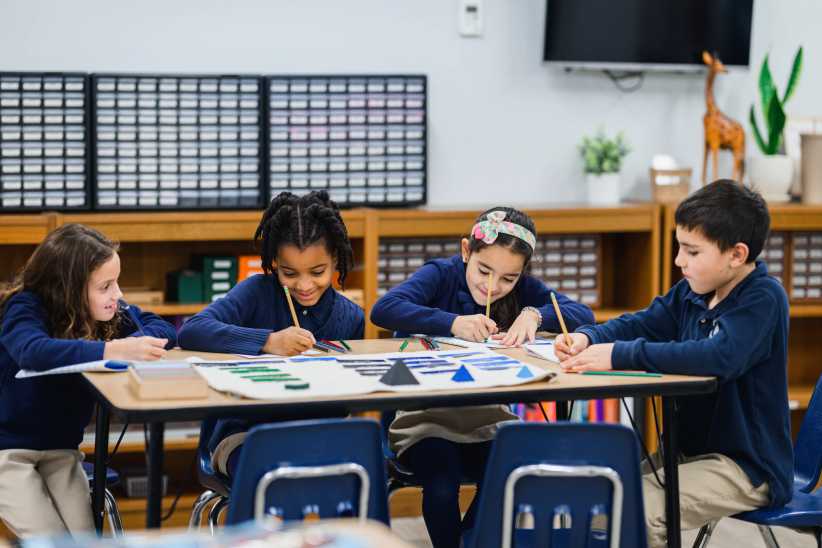
Beyond the individualized learning approach, the Montessori program at HCMS is academically strong, structured, and designed to prepare your child for the future. “Hudson teaches students to think, not simply to memorize. Students are self-starting, organized and taught to think through their own problems,” Mark emphasizes. “Creativity, resilience, flexibility and critical thinking are the key durable skills children will need for future careers in an AI world. Learning how to learn will get you through life. Imagine how you would feel as a young child who just figured out something challenging on their own. You would feel proud and accomplished. That’s how we build self-esteem.”
Instead of fragmented, hurried lessons, students have uninterrupted blocks of time to go deep on tackling problems and solutions. Montessori’s project and inquiry-based learning helps children become more engaged. “We’re fully engaged all the time because we’re working on projects that are meaningful to students, and it’s being presented to us in a way that we find interesting,” says Mark. “When you’re seeing things in a multi-sensory way, the light bulbs go off all over the place.”
HCMS also has multi-age classrooms, in which students stay with the same teacher and peer community for up to three years. Teachers develop strong relationships with students and families. Younger children get to observe older ones, while older students step into mentoring and leadership roles. Children learn at an accelerated pace with the added stability. “When you are not changing teachers each year, the teacher knows each child and where they were left off at the end of the prior year,” says Mark. “Since 2/3 of the class is returning each year, the culture and tone of the classroom are already established. The new academic year begins with learning on day one.”
While academic rigor is important, we also know how important it is to find a school that will develop our child’s emotional health, confidence, and resilience. HCMS cares deeply about growing children as people, not just academically.
“We don’t just focus on academics—we focus on the whole child,” explains Neeru. “Social emotional well-being is important to us too.” HCMS helps students build healthy relationships and learn how to manage them. “When something is not working in the classroom, they have a community meeting and talk about it,” Neeru says. “The teachers don’t come up with the answers because we want the children to think for themselves.”
HCMS uses these moments of conflict-resolution to instill values that students carry with them throughout their lives. “Montessori is very much grounded in respect,” Mark says. “Respect for yourself, respect for others, and how you treat people.”
Well-being is another big aspect of developing the whole child. Because students can move at their own pace and have agency over their learning, the usual stressors in school—pressure, boredom, perfectionism—fade. Students learn because they’re engaged, not because they’re chasing grades or rewards. This creates a more supportive and less stressful classroom environment.
So if you are looking for a school that is both academically rigorous and emotionally supportive, look no further than HCMS. We all want to see our little ones thrive, and HCMS can help them to do just that. To learn more, head to Hudsoncountry.org to inquire or schedule a tour.