
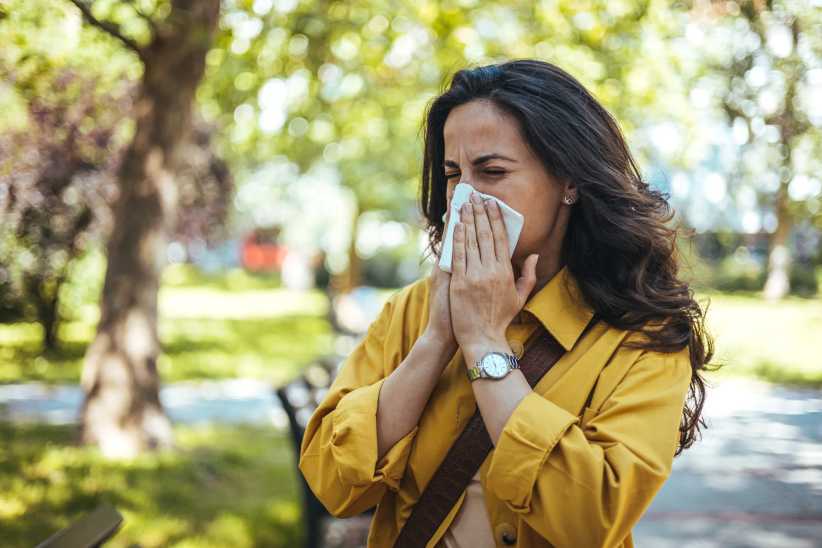
After a long, snowy winter, many parents are bracing for a tough allergy season. An expert explains why pollen may hit harder this spring and what families can do now to prepare.
At a Glance
- Why allergy season can feel more intense in New York City
- How a snowy winter may impact spring pollen levels
- Where allergies tend to hit hardest across the city
- Simple daily habits that can help families manage symptoms
- What parents should know before peak pollen arrives
In the midst of the two feet of snow that came and stayed longer than we probably could have imagined (I mean, who can believe the remaining gray mounds that were still there on the day it nearly hit 80?), I started sneezing… while freezing.
I went home to find my son sneezing, and my daughter texted to say she felt congested and her eyes were tearing. It couldn’t be allergies though…could it? The next day, while walking my dog, I noticed several little bright green bulbs shooting out from under the snowm which made me think that perhaps it was.
We consulted Dr. Mauli Desai, Allergist/Immunologist, Montefiore Einstein and Associate Professor of Medicine, Montefiore Einstein, to get the real deal on what is happening with allergies this season, are they really getting worse, and what can be done about it.
You may be surprised at what’s to come this season!
Psst… Check Out Type 1 Diabetes Isn’t Always Obvious: Signs, Testing & Support
NYF: Every spring, it feels like allergies get worse—do they really, or is it just in our heads?
Dr. Desai: Yes, it really feels worse for many, and it’s not just in your head. The intensity of spring allergies depends on several factors, such as the pollen concentrations, the length of the pollen season, and an individual’s sensitivity to pollen (which can increase over time). Climate changes and warmer temperatures can cause the pollen season to start early, last longer, and feel more intense. This is what we are seeing, and it’s making spring a tough season for many allergy sufferers
NYF: After this brutal snowy winter, should we expect a milder or nastier allergy season?
Dr. Desai: A heavy, snowy winter can set the stage for a severe spring allergy season. For one, the ground is moist, which can lead to a more intense release of pollen as trees bloom. A long winter can also delay the release of some pollens, so instead of a staggered release, multiple types of trees can release massive amounts of pollen at once, sometimes called a “pollen bomb”.
NYF: Are there certain neighborhoods in NYC where spring allergies tend to be worse, or is it pretty much citywide?
Dr. Desai: Spring allergies are citywide. That said, areas right near parks and places with high tree density will be impacted more.
NYF: What’s the absolute best thing parents can do every single day to stay ahead of pollen?
Dr. Desai: Prepare for allergy season. Speak with your doctor and make sure you have medications ready.
NYF: For kids and adults already taking allergy meds, what extra steps help when symptoms spike?
Dr. Desai: When pollen counts are high, it is helpful to keep the windows closed and the air conditioning on, especially during peak pollen hours in the early morning. Sunglasses can help protect the eyes from pollen in the air. Wearing a mask might be useful, especially if you’re riding a bike on a warm, breezy day.
NYF: What are some smart tricks to keep pollen out of the house besides just closing the windows?
Dr. Desai: Taking a shower right when you come home and washing your hair can prevent you from tracking pollen into your home.
NYF: What are some easy, practical tips for kids so school and outdoor play don’t get ruined by allergies?
Dr. Desai: Checking pollen forecasts can help you know when to be prepared. Start your medications early and be consistent, as this will make allergies easier to manage. If you wait for your symptoms to become really bad, they may be harder to bring under control. When possible, avoid outdoor exercise in the early morning, as pollen counts are often highest at this time.
NYF: Looking ahead, do you expect allergy seasons to change in intensity, or is it more about individual sensitivity?
Dr. Desai: Allergy seasons will be impacted by climate change and changing weather patterns. People can also become more sensitized to pollen over time. If over-the-counter medications are not sufficient, it’s time to see an allergist who can tailor a treatment plan, which may include treatments like immunotherapy or other treatment plans.
Psst… Check Out 21 Free and Fun Spring Break Activities for Kids in New York City