The Best Neighbourhoods in Queens, NY for Families
Queens stands out as a great place for families because neighborhoods like Astoria, Bayside, Forest Hills, and Kew Gardens create a warm and welcoming atmosphere, and kids always find something fun to do. Families enjoy riding scooters on quiet streets, visiting small toy shops, picking up sweet treats from local bakeries, and joining community events that bring everyone together.
Families can enjoy sprawling parks like Flushing Meadows–Corona Park, the Queens Zoo, and kid-focused museums like the New York Hall of Science.
If you’re looking for diversity, Queens has been regarded as the most ethnically diverse urban area in the world! Residents from over 120 countries, speaking more than 160 languages, call Queens home. This diversity is reflected in its neighborhoods, top-rated public schools, and cultural institutions, making it a uniquely inclusive place for families.
Psst… Check Out Our 2025 Guide to NYC Neighborhoods: Manhattan
Too Long; Didn’t Read (TL;DR)
- Most Preferred Neighborhoods: Astoria, Bayside, Forest Hills, Kew Gardens.
- Best for Parks & Outdoor Fun: Astoria Park, Flushing Meadows–Corona Park, Forest Park, Alley Pond Park.
- Best for Schools & Learning: Bayside (Bell Academy, Bayside High), Forest Hills (Forest Hills HS, P.S. 101), Kew Gardens (Queens HS for Sciences).
- Best for Family-Friendly Streets & Shops: Astoria (toy stores, kid cafés), Forest Hills (Austin Street shops, Eddie’s Sweet Shop), Kew Gardens (local bakeries, bookstores).
- Commute-Friendly Options: Astoria (N/W trains, RFK Bridge), Bayside (LIRR to Grand Central), Forest Hills (E/F/M/R trains, LIRR), Kew Gardens (E/F trains, LIRR).
- Housing Choices: Co-ops, condos, townhouses, single-family homes, garden apartments (varies by neighborhood).
- Rent & Home Prices: Starting 2-bedroom rent $2,200–$3,800/month; median home sale $442K–$1.5M depending on neighbourhood.
- Quick Safety Tip: Look for quiet streets, clean parks, and friendly neighbors for kids.
Each neighborhood holds peaceful streets, fun play areas, and friendly corners where kids can explore safely and happily. The next section talks about Astoria, Bayside, Forest Hills, and Kew Gardens, and shows how each place brings its own kind of comfort, care, and everyday fun for families
Astoria
Astoria is one of the most popular neighborhoods in Queens for families, thanks to its vibrant community, cultural diversity, and convenient access to Manhattan—just a 15–20-minute ride on the N or W train. The area attracts a diverse, middle-class crowd seeking a balance of affordability, culture, and a tight-knit neighborhood feel.
Known as New York’s unofficial Greek capital, Astoria offers some of the city’s best Greek restaurants, alongside a growing mix of global cuisines. The neighborhood has a strong family-friendly appeal, with playgrounds, family-run businesses, and community events throughout the year.
With stunning views of the East River and Manhattan skyline, Astoria Park provides ample green space for outdoor fun, sports, and seasonal programming. The park also features one of the city’s largest public pools, tennis courts, and running tracks, making it a destination for families throughout the warmer months.
Astoria has excellent preschools, daycares, enrichment centers, and easy access to nearby museums. Steinway Street and Ditmars Boulevard serve as bustling commercial hubs with toy stores, kid-friendly cafes, bookstores, and ice cream shops. The neighborhood also hosts regular cultural festivals, street fairs, and farmers’ markets that bring neighbors together. With its strong sense of community and dynamic mix of amenities, Astoria continues to be a top choice for families looking to put down roots in New York City.
Hot Spots: Astoria Park, Athens Square Park, Museum of the Moving Image
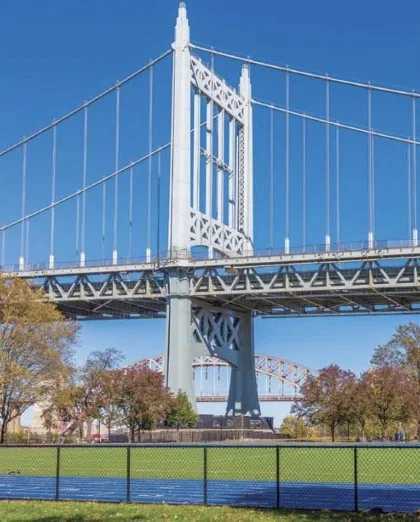
Commute: N/W subway lines, express buses, CitiBike, and proximity to the RFK Bridge for drivers.
Housing Options: Co-ops, high-rise luxury condos and rentals, multi-family homes, prewar apartments, single-family/detached homes,
and rowhouses.
Median Home Sale Value: Attached homes: $690K, Single-family detached homes: $1.2M+
Starting Rent for 2-Bedroom Apartment: $3,800/month
Schools: Approximately 20 schools, including P.S. 122 and P.S. 166, which are known for academic excellence and community involvement.
Bayside
Bayside stands out as a top pick for families, boasting an excellent school system, a welcoming family environment, and a rich cultural tapestry. Once a retreat for artists and celebrities in the early 20th century, Bayside developed into a residential enclave following the expansion of railroads and highways.
Now, the vibrant neighborhood in northeastern Queens presents a variety of housing choices, from spacious single-family homes and brick colonials to townhouses and apartments. Tree-lined streets and well-kept properties give it a spacious, family-friendly feel. Known for its peaceful, suburban vibe, Bayside is ideal for commuting families, with LIRR service from Bayside Station, several bus routes, and quick access to major highways making Manhattan reachable in less than an hour.
The neighborhood offers a variety of convenient shopping options, from national big box retailers to beloved local spots along Bell Boulevard. Something to consider is that North Bayside features larger single-family homes, while South Bayside leans toward smaller homes and garden apartments; Bell Boulevard events like farmer’s markets or street festivals occasionally slow traffic.
Hot Spots: Alley Pond Park/Horatio Playground, Crocheron Park, Marie Curie Playground, Bell Boulevard annual Food & Music Festival, Maria’s Mediterranean, Espurresso Cat Café
Commute: LIRR Port Washington Branch to Grand Central Terminal, several bus routes, and easy access to major highways
Housing Options: Detached single-family homes, garden apartments, low-rise co-ops, and townhouses
Median Home Sale Value: $660K–$800K, with single-family homes closer to $1.12M
Starting Rent for 2-Bedroom Apartment: $2,200 per month
Schools: 49 schools, including the highly-rated Bell Academy, Bayside High School, and P.S. 203 Oakland Gardens.
Forest Hills
Known for its tree-lined streets, Tudor and colonial-style homes, and charming private community of Forest Hills Gardens—with some of the most expansive properties in the county—Forest Hills has long attracted families seeking a peaceful oasis within the hustle of the city.
Blending historic charm with modern urban amenities, this serene, yet bustling neighborhood in central Queens, Forest Hills has a rich history that dates back to the early 1900s when it was developed as a “garden community”— one of the city’s first planned communities. This diverse neighborhood once had a significant Jewish community, particularly after World War II, and later became home to multiple ethnicities, including many from Asian and Eastern European backgrounds.
Families have been drawn to this neighborhood for its excellent schools, lush, green parks, and strong community feel. Public spaces like Willow Lake Playground and Forest Park’s array of recreational facilities, including a pond, playground, and dog runs.
Austin Street is a favorite family destination, perfect for a stroll while exploring its many shops, restaurants, and cafés. Cultural highlights include the iconic Forest Hills Stadium, which hosts concerts and community events, and the West Side Tennis Club, home of the original U.S. Open.
Manhattan is just a quick subway, LIRR, or bus ride away. The busy Queens Boulevard cuts through the neighborhood; many drivers exit the highways to take this local, direct route into Manhattan. Parking in Forest Hills is difficult, so it makes sense to plan ahead. But many residents love the easy access to several subway lines (E, F, M, and R), the LIRR, and express bus lines.
Some things to consider are that the Cord Meyer community on the northern side of Forest Hills features larger single-family homes; the south has higher-density apartments and co-ops. Expect lots of traffic near Forest Hills Stadium. Many buildings are landmarked, which is excellent for preservation lovers, but renovation rules are stricter.
Hot Spots: Eddie’s Sweet Shop, Aigner Chocolates, Forest Hills Greenmarket, Forest Hills Stadium, MacDonald Park, Willow Lake Playground, Dream City, Hug Music, Queens Community House-Forest Hills
Housing Options: Single-family Tudor homes, row houses, pre-war co-ops, modern luxury condos, townhouses, low- and high-rise apartments
Commute: E/F, M/R subway lines, LIRR, express bus
Median Home Sale Value: Attached homes, $442K–$465K; single-family detached homes, $800K
Starting Rent for 2-Bedroom Apartment: $3,000
Schools: 19 schools, including Forest Hills High School and P.S. 101 School in the Gardens
Kew Gardens
Kew Gardens is a peaceful enclave in central Queens that combines small-town charm with urban convenience. Originally developed as one of New York’s first commuter suburbs in the early 20th century, the cozy, walkable, family-oriented neighborhood continues to lure families with its quiet, residential vibe, in contrast to the bustle of other city neighborhoods.
Historic Tudor-style homes, pre-war co-ops along tree-lined streets, and local businesses on Lefferts Boulevard give the neighborhood a strong sense of community. Families are welcome to enjoy independent cafés, restaurants, bakeries, boutiques, toy stores, and bookstores, making this quaint neighborhood ideal for raising children.
Nearby Forest Park offers families recreation year-round with its sprawling green space, playgrounds, hiking trails, sports fields, carousels, and horseback riding. With its blend of architectural character, transit convenience, and welcoming community atmosphere, Kew Gardens continues to be a top pick for families seeking a balanced neighborhood experience in New York City.
Hot Spots: Baker’s Dozen Bagels, Forest Park, Ralph J. Bunche House, Maple Grove Cemetery
Commute: E/F subway lines, express buses, or LIRR train to midtown from Kew Gardens station
Housing Options: Condos, co-ops, low- and midrise apartment buildings, single-family detached homes, and townhouses
Median Home Sale Value: $1.5M
Starting Rent for 2-Bedroom Apartment: $2,800
Schools: 49 schools, including Queens High School for the Sciences at York College and The Kew-Forest School.
Psst… Check Out 2025 Guide to NYC Neighborhoods: Brooklyn
Queens Neighborhoods Comparison Table
| Category | Astoria | Bayside | Forest Hills | Kew Gardens |
| Vibe | Vibrant, diverse, energetic, very community-driven | Quiet, suburban, spacious, strong family feel | Historic, charming, leafy, upscale urban-suburban mix | Peaceful, small-town charm with urban convenience |
| Family Appeal | Playgrounds, family businesses, cultural festivals | Excellent schools, tree-lined streets, calm atmosphere | Great schools, parks, and cultural venues | Walkable, cozy community, independent shops |
| Hot Spots | Astoria Park, Athens Square Park, Museum of the Moving Image | Alley Pond Park, Crocheron Park, Bell Blvd festivals | Eddie’s Sweet Shop, Forest Hills Stadium, Forest Park | Forest Park, Baker’s Dozen Bagels, Maple Grove Cemetery |
| Commute | N/W trains, express buses, CitiBike, RFK Bridge | LIRR from Bayside Station, bus routes, highways | E/F/M/R trains, LIRR, express buses | E/F trains, LIRR (Kew Gardens Station), express buses |
| Housing Options | Co-ops, condos, rentals, prewar apartments, rowhouses | Single-family homes, co-ops, townhouses, garden apartments | Tudors, rowhouses, co-ops, condos, apartments | Condos, co-ops, low-rise apartments, single-family homes |
| Median Home Sale Value | Attached: -$690K; Single-family: $1.2M+ | $660K–$800K; Single-family: -$1.12M | Attached: $442K–$465K; Single-family: -$800K | -$1.5M |
| 2-Bedroom Rent (Starting) | -$3,800/month | -$2,200/month | -$3,000/month | -$2,800/month |
| Schools | -20 schools (incl. P.S. 122, P.S. 166) | 49 schools (Bell Academy, Bayside HS) | 19 schools (Forest Hills HS, P.S. 101) | 49 schools (Kew-Forest School, Queens HS for Sciences) |
| What to Consider | Busy, lively, high demand | North vs. South Bayside housing differences; traffic near Bell Blvd events | Parking is tough; landmark rules limit renovations; traffic near the stadium | Quiet but limited nightlife; mostly low-rise buildings |
| Best For | Families wanting diversity, restaurants, fast commute to Manhattan | Families wanting great schools and a suburban feel | Families wanting charm, history, and strong transit access | Families wanting peace, greenery, and a quaint, cozy neighborhood |
What to Consider When Choosing a Queens Neighborhood?
Picking the right neighborhood in Queens feels a little like choosing the best place to play, learn, and grow because every area has its own special things that make life happy for families and kids.
The next few points share the most important things families usually think about when exploring different Queens neighborhoods. Each point explains something that can help families choose a place that feels just right, with friendly streets, good schools, and fun parks where kids can enjoy their days.
- Safety and Comfort: Families like neighborhoods that feel calm, safe, and easy for kids to walk around. Quiet streets, friendly neighbors, and clean parks make a big difference in helping children feel relaxed and happy every day.
- Schools and Learning: Good schools help kids learn new things and feel excited about their day. Many Queens neighborhoods have strong schools, fun programs, and caring teachers who make learning feel simple and welcoming.
- Parks and Play Spaces: Kids need open spaces to run, climb, and play, so neighborhoods with parks, playgrounds, and green areas feel extra special. These places help children move around, make friends, and enjoy the fresh air.
- Transportation and Travel: Some neighborhoods are close to trains or buses that help families reach school, work, or fun places faster. Easy travel makes days smoother and gives families more time together.
- Shops and Family Spots: Having small shops, bakeries, toy stores, and kid-friendly cafés nearby makes life easier and more fun. These spots give families quick snacks, cozy breaks, and happy moments during the day.
Questions Families Often Ask
- What is the nicest neighborhood in Queens?
Many people say Forest Hills is one of the nicest neighborhoods in Queens because it has pretty streets, cozy homes, and lots of parks where kids can play and enjoy sunny days. - What is the poshest neighborhood in NYC?
The poshest neighborhood in New York City is Manhattan’s Upper East Side, where many fancy buildings, big homes, and high-end stores make the area feel extra stylish and rich. - Is Queens, New York, a nice neighborhood?
Queens is not just one neighborhood — it is a whole borough — and yes, it is a very nice place for families. It has friendly people, fun parks, great food, and many safe areas that help kids feel happy and comfortable. - Which Queens neighborhood is best for families with kids?
Many families love Astoria, Bayside, Forest Hills, and Kew Gardens because these neighborhoods have good schools, green parks, fun places to visit, and warm, welcoming streets that feel good for children.